Papers by Giuseppe Magnifico
Quantum 4, 281, 2020
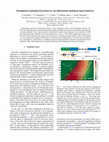
We study the out-of-equilibrium properties of 1 + 1 dimensional quantum elec-trodynamics (QED), d... more We study the out-of-equilibrium properties of 1 + 1 dimensional quantum elec-trodynamics (QED), discretized via the staggered-fermion Schwinger model with an Abelian Zn gauge group. We look at two relevant phenomena: first, we analyze the stability of the Dirac vacuum with respect to particle/antiparticle pair production , both spontaneous and induced by an external electric field; then, we examine the string breaking mechanism. We observe a strong effect of confinement, which acts by suppressing both spontaneous pair production and string breaking into quark/antiquark pairs, indicating that the system dynamics displays a number of out-of-equilibrium features.
Phys. Rev. B 101, 085136, 2020
Entanglement provides characterizing features of true topological order in two-dimensional system... more Entanglement provides characterizing features of true topological order in two-dimensional systems. We show how entanglement of disconnected partitions defines topological invariants for one-dimensional topological superconductors. These order parameters quantitatively capture the entanglement that is possible to distill from the ground-state manifold and are thus quantized to 0 or log2. Their robust quantization property is inferred from the underlying lattice gauge theory description of topological superconductors and is corroborated via exact solutions and numerical simulations. Transitions between topologically trivial and nontrivial phases are accompanied by scaling behavior, a hallmark of genuine order parameters, captured by entanglement critical exponents. These order parameters are experimentally measurable utilizing state-of-the-art techniques.

Phys. Rev. B 101, 085124, 2020
We analyze the possible existence of topological phases in two-legged spin ladders considering a ... more We analyze the possible existence of topological phases in two-legged spin ladders considering a staggered interaction in both chains. When the staggered interaction in one chain is shifted by one site with respect to the other chain, the model can be mapped, in the continuum limit, into a non linear sigma model NLσM plus a topological term which is nonvanishing when the number of legs is two. This implies the existence of a critical point which distinguishes two phases. We perform a numerical analysis of energy levels, parity and string non-local order parameters, correlation functions between x, y, z components of spins at the edges of an open ladder, the degeneracy of the entanglement spectrum and the entanglement entropy in order to characterize these two different phases. We identify one phase with a Mott insulator and the other one with a Haldane insulator.
Phys. Rev. B 100, 115152, 2019
We present a detailed study of the topological Schwinger model [Phys. Rev. D 99, 014503 (2019)], ... more We present a detailed study of the topological Schwinger model [Phys. Rev. D 99, 014503 (2019)], which describes (1+1) quantum electrodynamics of an Abelian U(1) gauge field coupled to a symmetry-protected topological matter sector, by means of a class of ZN lattice gauge theories. Employing density-matrix renor-malization group techniques that exactly implement Gauss' law, we show that these models host a correlated topological phase for different values of N, where fermion correlations arise through inter-particle interactions mediated by the gauge field. Moreover, by a careful finite-size scaling, we show that this phase is stable in the large-N limit, and that the phase boundaries are in accordance to bosonization predictions of the U(1) topolog-ical Schwinger model. Our results demonstrate that ZN finite-dimensional gauge groups offer a practical route for an efficient classical simulation of equilibrium properties of electromagnetism with topological fermions. Additionally, we describe a scheme for the quantum simulation of a topological Schwinger model exploiting spin-changing collisions in boson-fermion mixtures of ultra-cold atoms in optical lattices. Although technically challenging, this quantum simulation would provide an alternative to classical density-matrix renormalization group techniques, providing also an efficient route to explore real-time non-equilibrium phenomena.

Phys. Rev. B 99, 094434 , 2019
We investigate a model of hard-core bosons with infinitely repulsive nearest-and next-nearest-nei... more We investigate a model of hard-core bosons with infinitely repulsive nearest-and next-nearest-neighbor interactions in one dimension, introduced by Fendley, Sengupta and Sachdev in Phys. Rev. B 69, 075106 (2004). Using a combination of exact diagonalization, tensor network, and quantum Monte Carlo simulations, we show how an intermediate incommensurate phase separates a crystalline and a disordered phase. We base our analysis on a variety of diagnostics, including entanglement measures, fidelity susceptibility, correlation functions, and spectral properties. According to theoretical expectations, the disordered-to-incommensurate-phase transition point is compatible with Berezinskii-Kosterlitz-Thouless universal behavior. The second transition is instead non-relativistic, with dynamical critical exponent z > 1. For the sake of comparison, we illustrate how some of the techniques applied here work at the Potts critical point present in the phase diagram of the model for finite next-nearest-neighbor repulsion. This latter application also allows us to quantitatively estimate which system sizes are needed to match the conformal field theory spectra with experiments performing level spectroscopy.
Phys. Rev. D 98, 074503, 2018
We study the ground-state properties of a class of Zn lattice gauge theories in 1 + 1 dimensions,... more We study the ground-state properties of a class of Zn lattice gauge theories in 1 + 1 dimensions, in which the gauge fields are coupled to spinless fermionic matter. These models, stemming from discrete representations of the Weyl commutator for the U(1) group, preserve the unitary character of the minimal coupling, and have therefore the property of formally approximating lattice quantum electrodynamics in one spatial dimension in the large-n limit. The numerical study of such approximated theories is important to determine their effectiveness in reproducing the main features and phenomenology of the target theory, in view of implementations of cold-atom quantum simulators of QED. In this paper we study the cases n = 2 ÷ 8 by means of a DMRG code that exactly implements Gauss' law. We perform a careful scaling analysis, and show that, in absence of a background field, all Zn models exhibit a phase transition which falls in the Ising universality class, with spontaneous symmetry breaking of the CP symmetry. We then perform the large-n limit and find that the asymptotic values of the critical parameters approach the ones obtained for the known phase transition the zero-charge sector of the massive Schwinger model, which occurs at negative mass.
Phys. Rev. D 99, 014503, 2019
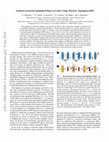
The interplay of symmetry, topology, and many-body effects in the classification of phases of mat... more The interplay of symmetry, topology, and many-body effects in the classification of phases of matter poses a formidable challenge in condensed-matter physics. Such many-body effects are typically induced by inter-particle interactions involving an action at a distance, such as the Coulomb interaction between electrons in a symmetry-protected topological (SPT) phase. In this work we show that similar phenomena also occur in certain relativistic theories with interactions mediated by gauge bosons, and constrained by gauge symmetry. In particular, we introduce a variant of the Schwinger model or quantum electrodynamics (QED) in 1+1 dimensions on an interval, which displays dynamical edge states localized on the boundary. We show that the system hosts SPT phases with a dynamical contribution to the vacuum θ-angle from edge states, leading to a new type of topological QED in 1+1 dimensions. The resulting system displays an SPT phase which can be viewed as a correlated version of the Su-Schrieffer-Heeger topological insulator for polyacetylene due to non-zero gauge couplings. We use bosonization and density-matrix renormalization group techniques to reveal the detailed phase diagram, which can further be explored in experiments of ultra-cold atoms in optical lattices. Global and local symmetries play a crucial role in our understanding of Nature at very different energy scales [1, 2]. At high energies, they govern the behavior of fundamental particles [3], their spectrum and interactions [4, 5]. At low energies [6], spontaneous symmetry breaking and local order parameters characterize a wide range of phases of matter [7] and a rich variety of collective phenomena [8]. There are, however, fundamental physical phenomena that can only be characterized by non-local order parameters, such as the Wil-son loops distinguishing confined and deconfined phases in gauge theories [9], or hidden order parameters distinguishing topological phases in solids [10]. The former, requiring a non-perturbative approach to quantum field theory (e.g. lattice gauge theories (LGTs)), and the latter, demanding the introduction of mathematical tools of topology in condensed matter (e.g. topological invariants), lie at the forefront of research in both high-energy and condensed-matter physics. The interplay of symmetry and topology can lead to a very rich, and yet partially-uncharted, territory. For instance, different phases of matter can arise without any symmetry breaking: symmetry-protected topological (SPT) phases. Beyond the celebrated integer quantum Hall effect [11-14], a variety of SPT phases have already been identified [15-17] and realized [18]. Let us note that some representative models of these SPT phases [19] can be understood as lower-dimensional versions of the so-called domain-wall fermions [20], introduced in the context of chiral symmetry in lattice field theories [21]. A current problem of considerable interest is to understand strong-correlation effects in SPT phases as interactions are included [22], which may, for instance, lead to exotic fractional excitations [23, 24]. So far, the typical interactions considered involve an action at a distance (e.g. screened Coulomb or Hubbard-like nearest or next-to-nearest neighbor interactions). To the best of our knowledge, and with the recent exception [25], the study of correlated SPT phases with mediated interactions remains a largely-unexplored subject. In this work, we initiate a systematic study of SPT phases with interactions dictated by gauge symmetries focusing on a 2a x c 2n+1 c † 2n (1 − )U 2n U 2n−1 c † 2n−1 c 2n a b U n c n+1 +m s −m s c † n c n n+ + +1 +m m s −m m m m s fermion fields gauge fields FIG. 1. Discretizations for standard and topological QED 2 : (a) Staggered-fermion approach to the massive Schwinger model. The relativistic Dirac field is discretized into spinless lattice fermions subjected to a staggered on-site energy ±m s , represented by filled/empty circles in a 1D chain with alternating heights. The gauge field is discretized into rotor-angle operators that reside on the links, depicted as shaded ellipses with various levels representing the electric flux eigenbasis. The gauge-invariant term c † n U n c n+1 involves the tunneling of neighboring fermions, dressed by a local excitation of the gauge field in the electric-flux basis U n | = | + 1, represented by the zigzag grey arrow joining two neighboring fermion sites, via an excitation of the link electric-flux level. (b) Dimerized-tunneling approach to the topological Schwinger model. The previous staggered mass is substituted by a gauge-invariant tunneling with alternating strengths (1 − δ n)c † n U n c n+1 , where δ n = 0, ∆ for even/odd sites. This dimerization of the tunneling matrix elements is represented by alternating big/small ellipses at the odd/even links. the lattice Schwinger model, an Abelian LGT that regularizes quantum electrodynamics in 1+1 dimensions (QED 2) [26]. We show that a discretization alternative to the standard lattice approach [27] leads to a topological Schwinger model, and derive its continuum limit referred to as topological QED 2. This continuum quantum field theory is used to predict a phase diagram that includes SPT, confined, and fermion-condensate phases, which are then discussed in the context of the afore-mentioned domain-wall fermions in LGTs.



Uploads
Papers by Giuseppe Magnifico